Reflecting Realities Survey 2026
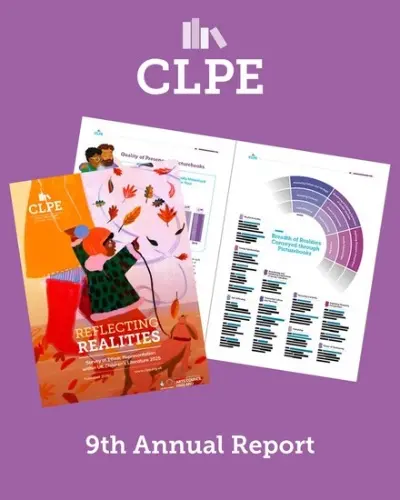
24 November, 2026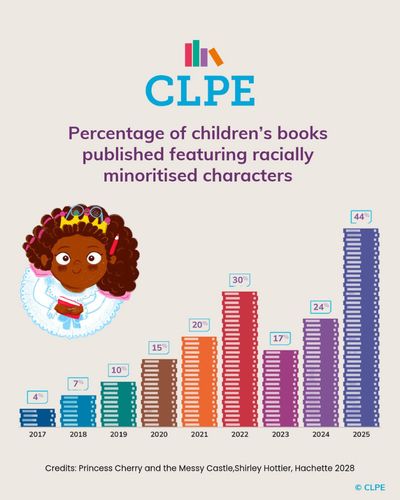 The latest Reflecting Realities Survey evaluating the quality and extent of ethnic representation in children’s literature in the UK reports the highest levels of representation in the survey’s nine-year history.
Published by the Centre for Literacy in Primary Education (CLPE), this annual survey looks at titles aimed at children aged 3-11 published in the UK in the preceding year.
In 2025, 44% of the 1,909 eligible titles (833 titles) featured racially minoritised characters – a 20 percentage point rise on last year’s figure of 24%.
Record highs for fiction and non-fiction…
The Reflecting Realities Survey focuses on picture books, fiction and non-fiction titles – the text types that typically make up the core stock of the average primary classroom book corner.
The 2026 report shows an improvement in representation across both fiction and non-fiction:
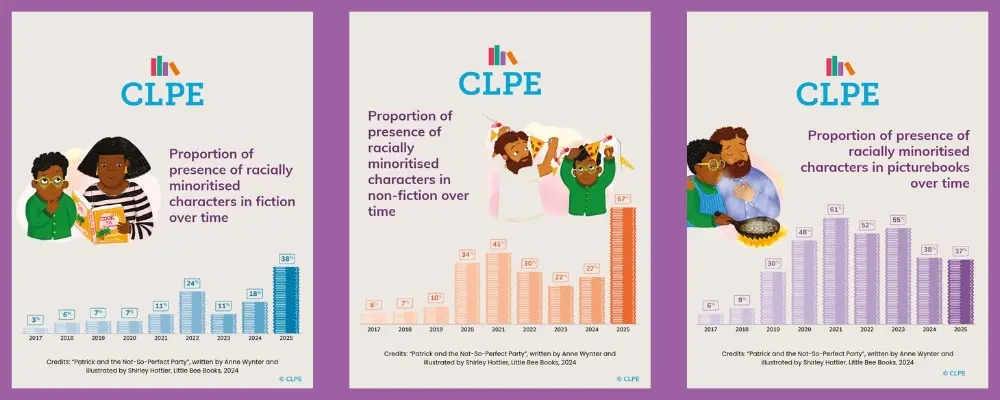
- Non-fiction saw the biggest year-on-year increase in racially minoritised presence, rising to a record 67% of books published in 2025, compared to 27% of books published in 2024.
- Fiction also recorded a significant rise in racially minoritised presence, increasing from 18% of books published in 2024 to 38% of books published in 2025, another record high figure.
But levels of representation in picture books remain static
In previous years, picture books have featured the highest levels of inclusion across the three text types, with levels of 61%, 52% and 55% recorded between 2021 and 2023. A sharp drop to 38% followed in 2024 and this year’s report shows a further, albeit slight, drop to 37%, making it the first year that representation in this text type has fallen behind that in fiction.
Casting and content
As well as monitoring and reporting on the overall levels of representation in the output of UK publishers, the Reflecting Realities Survey also considers how racially minoritised characters are positioned within the narrative and the quality of those portrayals, noting that ‘Reductive, problematic or ill conceived representation can be more damaging than no representation at all.’
This year’s review found evidence of increasingly nuanced representation across a broad range of genres, themes and subject areas, offering children greater opportunities to encounter racially minoritised characters in varied story worlds and contexts.
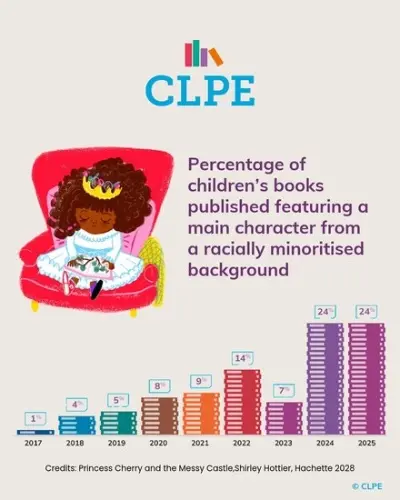
However, the report also noted that the proportion of books featuring a racially minoritised main character remained unchanged at 24%, despite the overall increase in representation. While this may partly reflect the substantial increase in non-fiction titles – which typically feature people in background scenes rather than as main characters – the finding raises important questions about the extent to which racially minoritised characters are being positioned at the centre of the story and highlights the importance of looking beyond the headline figures.
Reflections and recommendations
The report’s authors welcome the overall increase in ethnically inclusive publishing, describing this year’s figures as a ‘significant milestone‘ in the ongoing work to ensure that all young readers can access high-quality, inclusive literature.
However, the report also warns against complacency and calls on publishers to remain steadfast in their commitment to producing high-quality inclusive literature for children in order to sustain the progress made over the last nine years and ensure that rich, nuanced and meaningful representations become integral to mainstream children’s publishing in the UK.
Commenting on this year’s report, Farrah Serroukh, Executive Director of Research and Development at CLPE said:
‘This year’s findings mark an important milestone. We are reporting the highest levels of representation recorded in the history of this research series showing what is possible when the industry commits itself to meaningful change.
‘At the same time, these findings remind us that representation is about more than presence alone. The quality of representation, the positioning of characters and the sustainability of inclusive publishing practices remain just as important as headline figures.
‘As we approach ten years of Reflecting Realities, we hope the industry takes a moment to recognise how far it has come while continuing to invest in the infrastructure, talent and sustained commitment needed to ensure that inclusive literature remains a central and enduring part of children’s publishing.’
The full 2026 report can be downloaded from the CLPE website.
Building an inclusive book collection
Teachers and librarians have a vital role to play in ensuring that all children have the opportunity to encounter authentic and engaging texts that speak to their own lived experiences. We have pulled together a range of resources that can help you build an inclusive and representative book collection.
- This year’s Reflecting Realities report highlights over 70 exemplary texts that offer readers nuanced, multi-faceted characters and rich story worlds. See all the featured titles in this Reflecting Realities booklist compiled by Books for Topics.
- You can also explore Books for Topics’ own booklists that feature the best diverse and inclusive texts for different primary age groups.
- A Reflecting Realities Primary Book Pack featuring a selection of contemporary titles that offer accurate and well developed characterisations of people of colour is available from Letterbox Library.
- The (incomplete) Lit in Colour booklists include over 100 recommended texts by writers of colour for primary and secondary pupils. The lists are updated annually and include useful indexes that group books together by subject matter or genre.
- Sign up for CLPE’s Reflecting Realities in Your Classroom online learning session to understand the role that high-quality, inclusive literature plays in shaping positive reader and writer identity, and explore ways to create an ethnically representative curriculum and book selection. The one-hour webinar is recorded and available on demand until 19 December 2026 (£60).
- Sign up for one of the free online author events offered through the BookTrust Represents programme, set up to champion the representation of people of colour in children’s publishing.
- The Inclusive Books for Children Award, the Jhalak Children’s and YA Prize, the Little Rebels Award and The Diverse Book Awards all celebrate diverse and inclusive books for children and young people. Their shortlists are a useful source of book recommendation for schools and libraries.