The Teacher’s Bookshelf: CPD titles to support your literacy teaching
22 September, 2026 Welcome to The Teacher’s Bookshelf, our blog series highlighting must-read titles to support your literacy teaching and professional development. Each half term, we ask a literacy expert to share four or five books that have made a real difference in their work – titles that offer fresh thinking, proven strategies, and real classroom impact. Whether you’re exploring a new topic or refining your approach, these hand-picked recommendations are sure to be a valuable addition to your staffroom or home library.
We are delighted to welcome Rebekah Alsey, founder of The Inclusive Head Teacher, as our first guest reviewer for the new academic year. A former Primary Headteacher, Deputy Head and SENCO, she now works with schools across the UK to help them embed inclusion as a golden thread running through every part of school improvement, providing bespoke partnership support, SEND and inclusion audits, and training.
The heart of inclusion
Literacy, and in particular reading, has always sat right at the heart of inclusion for me. If a child can’t read, every part of school becomes harder. The books below changed how I taught and how I thought about my teaching of reading and writing. They all impacted my leadership as well – from how I led others and supported the children I served to how I ensure inclusion is at the heart of each and every part of the fabric of the schools I work with.
 Something on leadership and legacy
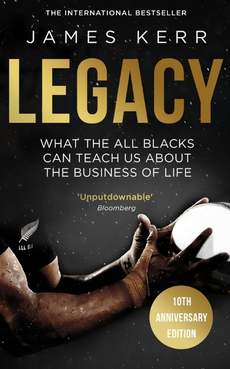
Legacy: What the All Blacks Can Teach Us About the Business of Life by James Kerr (Constable, 2013)
This isn’t your typical book about literacy but I come back to it constantly. Kerr’s central idea of ‘leave the jersey in a better place’ reframed how I thought about my own teaching and leadership. For me, this central theme is about raising the bar for the adults who teach our children, and about being honest enough to reflect on our own practice before we ever look at a child’s. When I think about literacy specifically, the legacy I wanted for every child that left our school was a love of reading, the ability to write with confidence and the belief that their voice matters. As a primary school educator, this (along with good number skills) is the only legacy that really counts.
Legacy is a book about culture and humility as much as it is about winning, and I think every school leader should read it. This is what true inclusion should be about.
 Something that changed how I teach reading
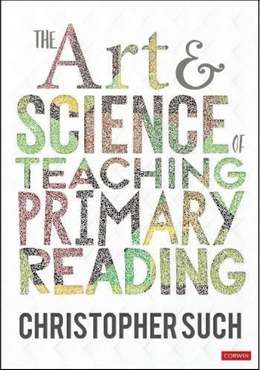
The Art and Science of Teaching Primary Reading by Christopher Such (Corwin, 2021)
This book genuinely blew my mind. I had spent years practising comprehension and inference skills with children: teach the skill, practise the skill, hope they get it and repeat it on a reading paper. Christopher Such dismantles that with real clarity, showing how much of what looks like a lack of reading skill is actually a knowledge problem. Which, when I really thought about it, I could see. To make meaning, children need to know a wide range of vocabulary, have some background knowledge and the ability to make links with that knowledge. The chapter on Language Comprehension really opened my eyes to this and to how complex inference actually is – and how ineffective teaching generic inference skills is.
If you want to understand why some children can decode beautifully and still fail to comprehend, this is the book that will help you see the gap and understand how important teaching knowledge is.
 Something that influenced who I am as a teacher and a leader
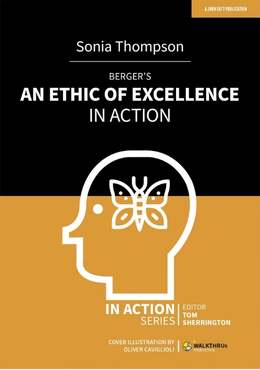
An Ethic of Excellence: Building a Culture of Craftsmanship with Students by Ron Berger (Heinemann, 2003), and Berger’s An Ethic of Excellence in Action by Sonia Thompson (John Catt, 2022)
I’ve paired these two books together as the first is the original work of Ron Berger (only available second hand in the UK), whilst the other gives UK educators a guide to follow. Berger’s idea of ‘beautiful work’ and that a child will rise to the expectations of the culture they are welcomed into is something I’ve used in every classroom and in every school I have led. As a teacher, and later as a Head, I would show children real examples of what excellence looked like by sharing the powerful video by Berger – Austin’s Butterfly. This was really helpful when we began to produce single and double-paged reading spreads about a book we loved in class. To be able to showcase these, share our drawings, favourite words and phrases and demonstrate our love of reading was so powerful. Excellence in reading and excellence in sharing our voice.
Sonia Thompson’s companion book takes these central themes and makes them practical for a UK primary classroom, which is exactly what busy teachers need. It’s also how we ensure inclusion still promotes excellence in our schools.
 Something that changed my assumptions
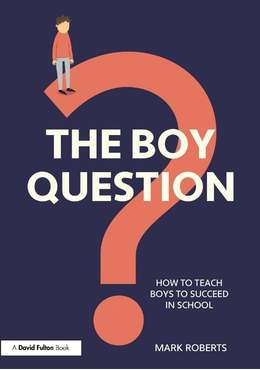
The Boy Question: How to Teach Boys to Succeed in School by Mark Roberts (Routledge, 2020)
This book made me properly examine the assumptions I’d carried, often without realising it, about boys and literacy. Roberts is clear about how easily those assumptions become self-fulfilling. For example, how a boy can quietly self-sabotage because this is easier than failing in front of his peers, and how much harder it can be to navigate being both cool and clever. It made me really consider how I chose books for a class or a library. If the books on offer only reflect a narrow idea of what boys are expected to like, we shouldn’t be surprised when some boys quietly opt out of reading altogether. This book changed not only my book selections but also the themes I chose to teach writing through. And it also made me really think about our unconscious bias due to the way society views boys and their interests.
If you have boys in your class or school that are underperforming, read this – and then begin to really question the books and reading material you are introducing to the boys in your class.