The Teacher’s Bookshelf: CPD titles to support your literacy teaching
13 May, 2026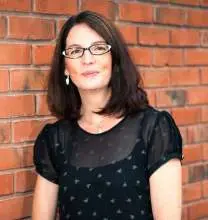 Welcome to The Teacher’s Bookshelf, our blog series highlighting must-read titles to support your literacy teaching and professional development. Each half term, we ask a literacy expert to share four or five books that have made a real difference in their work – titles that offer fresh thinking, proven strategies, and real classroom impact. Whether you’re exploring a new topic or refining your approach, these hand-picked recommendations are sure to be a valuable addition to your staffroom or home library.
Our latest guest reviewer is Rachel Clarke. Rachel has 30 years’ experience as a teacher, school leader and English consultant. She is the director of Primary English Education Consultancy where she works with teachers and educators across the country. Rachel loves children’s picture books and never misses an opportunity to add to her collection.
 Meeting the needs of every learner
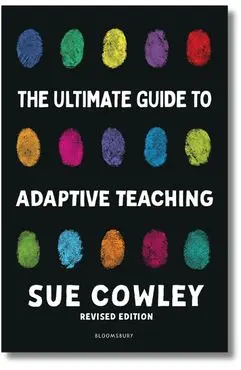
The Ultimate Guide to Adaptive Teaching (Revised edition) by Sue Cowley (Bloomsbury 2025)
Rachel says: ‘I’ve been a fan of Sue Cowley and her down-to-earth teaching books for many years. In this book she explores adaptive teaching – covering planning, resources, the learners, teaching and assessment. The book doesn’t just set out what adaptive teaching is; it gives detailed, practical approaches for teachers to use in their everyday lessons. It also acknowledges the subtlety of many of the adaptations teachers make, which is reassuring and empowering for those who feel there are a set of techniques that they are expected to ‘tick off’ if they are to be effective at adapting their teaching.
‘If you’re looking for practical ways to ensure all learners experience success, this is the book for you.’
 A planning roadmap
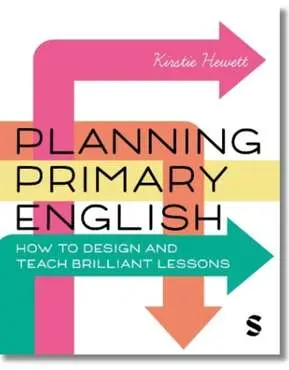
Planning Primary English: How to Design and Teach Brilliant Lessons by Kirstie Hewett (Sage Publications, 2024)
Rachel says: ‘This book is primarily aimed at trainee teachers. It is, however, well worth sharing with ECTs and more experienced teachers looking to plan effective, creative literacy lessons – I have used it myself when working in schools and writing training materials. The book considers how to plan for the full range of the literacy curriculum, including aspects often over-looked in other books, such as handwriting, oracy and reading for pleasure. Each aspect covered is always grounded in research and linked to the National Curriculum.
‘And if this doesn’t persuade you to take a look inside, it also includes literacy-specific advice for meeting the needs of SEN and EAL pupils as well as those requiring stretch and challenge.’
 Curriculum-aligned, classroom-ready strategies
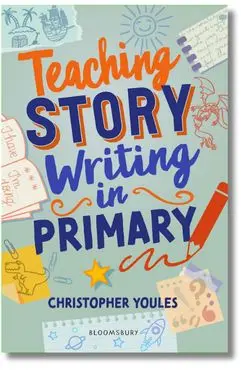
Teaching Story Writing in Primary by Christopher Youles (Bloomsbury, 2024)
Rachel says: ‘Teaching story writing is hard. In this book, author Christopher Youles shares his formidable knowledge of how stories are constructed and how to teach them. When discussing story structure, he goes beyond the story mountain to look at a range of different story structures. For teachers struggling with the National Curriculum requirement to use dialogue to create character and move the narrative forward, there are examples of these techniques as well as practical tips on how to teach them. There are ideas for how to create effective characters and support for writing settings that purposefully combine aspects of the grammar curriculum.
‘It is a wonderful book that would benefit all teachers of writing in KS2.’
A comprehension classic
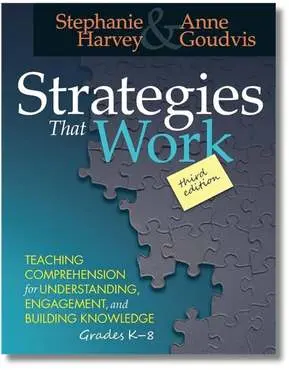
Strategies that Work: Teaching Comprehension for Engagement, Understanding, and Building Knowledge, Grades K-8 (Third edition) by Stephanie Harvey and Anne Goudvis (Routledge, 2017)
Rachel says: ‘I have a number of books by American educator Stephanie Harvey, and it was this book that started my collection. In this book, Harvey and Goudvis draw on their extensive knowledge of teaching reading in elementary schools. Along with commentaries on strategies taking place in schools, there are children’s work samples and plentiful references to children’s books. The authors share techniques for a wide range of comprehension skills, including tricky-to-teach areas such as visualising, summarising and activating background knowledge.
‘This book has the potential to enhance reading tuition so that it remains rigorous but embraces creativity, engagement and a love of quality literature.’
 Making sense of our world through stories
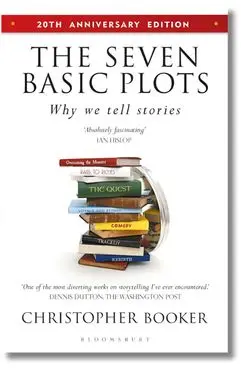
The Seven Basic Plots: Why We Tell Stories (20th anniversary edition) by Christopher Booker (Bloomsbury, 2024)
Rachel says: ‘I first read this book over 20 years ago and it changed my relationship with books and storytelling forever. It’s not written as a book for educators. However, as an exploration of stories and how they have evolved across the world, it provides teachers with incredible insights that can impact on their reading and writing (and their understanding of the books and films they encounter out of school). The premise of the book is that there are only seven types of story in the world with everything that we read or watch being a variation. For example, Booker outlines the Voyage and Return story, where characters start in a familiar setting, travel to a new world and then return home. This is a major story structure in children’s literature including Alice in Wonderland, The Lion, the Witch and the Wardrobe and The Wizard of Oz.
‘This book can have a transformative approach on how teachers approach the teaching of reading and writing – for example by improving the quality of reading predictions and by offering children simple structures to support their writing. Be warned; it’s not a quick read. At 736 pages it is a huge book but, having read it cover to cover, I can tell you it’s a powerful addition to your knowledge of literature.’