The Teacher’s Bookshelf: CPD titles to support your literacy teaching
25 November, 2026 Welcome to The Teacher’s Bookshelf, our blog series highlighting must-read titles to support your literacy teaching and professional development. Each half term, we ask a literacy expert to share four or five books that have made a real difference in their work – titles that offer fresh thinking, proven strategies, and real classroom impact. Whether you’re exploring a new topic or refining your approach, these hand-picked recommendations are sure to be a valuable addition to your staffroom or home library.
We are delighted to welcome Steve Willshaw as this term’s guest reviewer. Steve has over 35 years of experience in the secondary sector – serving as a Head of English, a Senior School Improvement Consultant and a MAT Senior Leader. Passionate about staff wellbeing and retention he now works as an executive coach supporting senior educational leaders to understand their behavioural patterns, optimise their energy and maximise interpersonal effectiveness.
Alongside his coaching, Steve champions curriculum ambition and literacy, collaborating with Mary Myatt on The Ambitious Years and driving the Rooted in Reading initiative. He is also the author of two books, The Functionally Fluent Teacher (2026) and Reading Aloud in Every Classroom (2026).
Four founding principles
My teaching career started way back in the 1980s in Tower Hamlets. I went on to teach English in several comprehensives across the Midlands before working as a local authority consultant and MAT subject lead. All these experiences helped shape my thinking, but I have only recently distilled them into four clear principles: radical simplicity, intellectual equity, relational agency, and professional craft.
The following four books have each guided that journey.
Connection with our lives
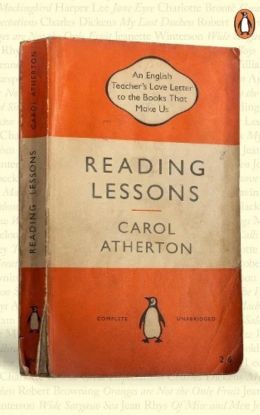
Reading Lessons: An English Teacher’s Love Letter to the Books that Shape Us by Carol Atherton (Penguin, 2025)
The books we study in school shouldn’t be treated as archaic puzzles that need to be unlocked by convoluted analysis. We need pupils, and teachers, to see them as vibrant collections of insights into how to live, illuminating our everyday existence. Carol Atherton’s Reading Lessons makes this point beautifully. Having known Carol for over twenty years, I love the candid way she writes about how familiar texts take on new meaning as her own life events bring different elements into focus.
An inspiring read for English specialists, but equally rewarding for anyone who loves literature.
What did you notice?
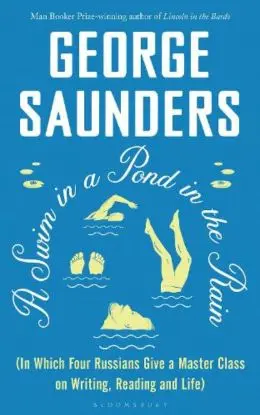
A Swim in a Pond in the Rain by George Saunders (Bloomsbury Publishing, 2022)
George Saunders is a prize-winning fiction writer, but he is also a university teacher. A Swim in a Pond in the Rain takes its title from a Chekhov short story, one of seven classic Russian tales he has taught for decades on a creative writing MFA. Alongside the stories themselves, Saunders shares the methods he uses to help students make sense of them. His approach is entirely free of jargon: there are no acronyms here. Instead, he relies on deceptively simple prompts such as “What did you notice?” to invite deep, genuine engagement.
This is what English teaching at every level ought to feel like: radical simplicity in service of craft.
Would you just read, wee man?
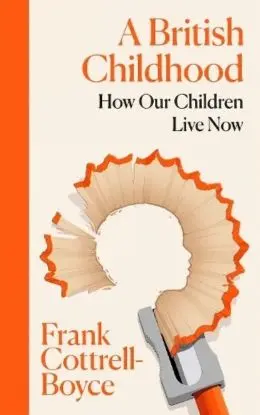
A British Childhood: How Our Children Live Now by Frank Cottrell-Boyce (Picador, 2026)
Frank Cottrell-Boyce’s A British Childhood is a powerful, warm examination of how our children live now, what has been lost, and why it matters. In one brilliant passage, he describes reading to a room of ‘stubbly teens’ in a Glasgow secondary school. Reading from Cosmic, he stops on a deliberate cliffhanger and suggests anyone wanting to know what happens next can borrow the book from the school library. He asks for questions; instead, the room demands he keep reading. The persistence builds until one enormous lad, ‘a postal district with arms’, insists he carry on.
Shared reading has an unmatched power to dismantle social barriers, and Cottrell-Boyce captures that relational magic vividly.
Miraculous alchemy
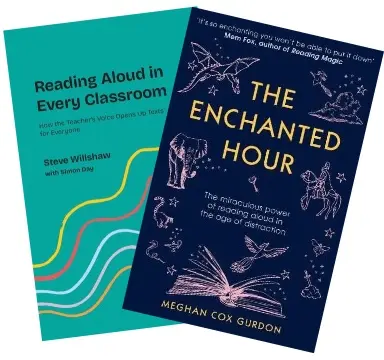
The Enchanted Hour by Meghan Cox Gurdon (Piatkus, 2020)
Meghan Cox Gurdon’s The Enchanted Hour also champions the power of reading aloud, focused largely on the family home. Gurdon makes a compelling case for the practice, showing how it nurtures competence, authenticity, and human connection across the pages. In an era where disconnection and alienation feel pervasive, this could hardly be more urgent.
Reading aloud undoubtedly broadens vocabulary, but its true power lies in helping us understand ourselves and one another.
None of these titles were written as conventional teacher CPD, yet every one of them contains masterclasses in pedagogy and humanity. Together, they have profoundly shaped my own work, culminating in my recent book, Reading Aloud in Every Classroom (Steve Willshaw Consulting Ltd, 2026). It was a true privilege when Meghan Cox Gurdon kindly offered words for the inside cover:
“Steve Willshaw has captured the philosophical whys and practical hows of group read-alouds to make an unassailable case for reading out loud in every classroom at every school – and at every age level.”