The Teacher’s Bookshelf: CPD titles to support your literacy teaching
10 March, 2026 Welcome to The Teacher’s Bookshelf, our blog series highlighting must-read titles to support your literacy teaching and professional development. Each half term, we ask a literacy expert to share four or five books that have made a real difference in their work – titles that offer fresh thinking, proven strategies, and real classroom impact.
Our latest guest reviewer is Dr Wayne Tennent, Senior Lecturer at Brunel University of London. Wayne is an award-winning lecturer and writer who works across a range of postgraduate programmes. Alongside this, Wayne also works with schools – both nationally and internationally – developing pedagogical practices to support teaching for reading comprehension. He is interested in the role of inference making and how dialogic interactions between teachers and children can be structured to promote a range of thinking.
A critical approach
‘We don’t need to look any further than traditional fairy tales and folk tales to see blatant sexism represented in plain sight. Female characters need to be rescued by dashing heroes, and older women are depicted as evil witches. This is why fractured fairy tales are so powerful in challenging stereotypical gender roles and behaviours – Bethan Woolvin’s picture books provide a good example of this.
It would be naïve, however, to believe that only texts from another era communicate ideas that we might want to question. As such, we need to bear in mind that the texts we present to children (written or otherwise) are not neutral and not separate from their everyday lives. Literacy, therefore, is much more than a set of skills. The texts we offer children need to be both chosen critically and read critically. Here is some CPD reading that can help with this.
 Mirrors and Windows
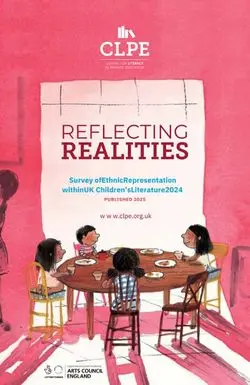
Reflecting Realities: Survey of Ethnic Representation within UK Children’s Literature (Centre for Literacy in Primary Education, 2025)
Wayne says: ‘Reflecting Realities sits neatly on a digital bookshelf and is downloadable from the CLPE website at no cost. It is an ongoing study that investigates the extent to which newly published children’s books reflect the diverse nature of the current UK context. Publishers have been more sensitive to this issue in recent years – although this could be seen to be a response to criticism of the monocultural nature of the books being published rather than a long-term commitment to more inclusive publishing. However, despite there being a far greater choice of diverse texts than a decade ago, it is questionable as to how widely used they are in classrooms.
The overwhelming majority of children do not live in an Enid Blyton-like world. Do the texts we ask children to engage with reflect who they are; or the world they live in?
 Challenging toxic cultures
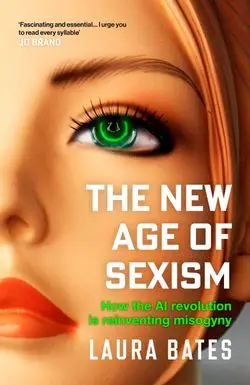
Wayne says: ‘It is usual in these times to talk of digital literacy as a specific type of literacy. In this book, Laura Bates investigates how AI has ushered in a new platform for sexism and misogyny to thrive. While making links to the broader societal context, it is disturbing to see how many examples are recounted of teenage boys using AI to produce sexualised images of teenage girls that they know. More disturbing is the fact that schools don’t seem to be responding to these incidents in a way that supports the teenage girls being objectified.
Men and teenage boys who exhibit toxic masculinity all share one common experience – the process of schooling. Have they been offered the opportunity to experience texts that force them to challenge such views?
 Critical literacy in practice
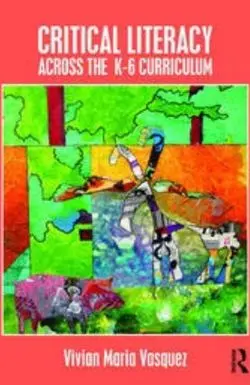
Critical Literacy across the K-6 Curriculum by Vivian Maria Vasquez (Routledge, 2016)
Wayne says: ‘In this text, Vasquez sets out how a critical literacy approach – one which challenges such things as racism and sexism – can be implemented in the classroom. Although developed in the context of the US, numerous practical, transferrable ideas are presented for the primary classroom. Examples of classroom practice are presented that extend across the curriculum. This reminds us that literacy is not confined to the process of teaching children to read and write. Vasquez makes clear that adopting a critical literacy approach does not mean overhauling current classroom practices; but is rather about making space to develop lines of enquiry that link to the children’s real-life experiences.
It involves teachers asking themselves such questions as ‘I wonder what they are making of this?’, and ‘How might they look at this in a slightly different way?’
 How reading comprehension happens
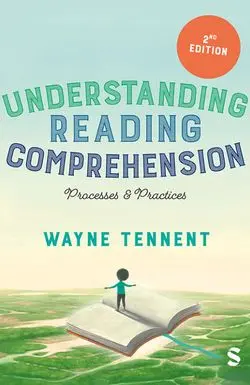
Understanding Reading Comprehension: Processes and Practices (2nd edition) by Wayne Tennent (Sage Publications, 2025)
Wayne says: ‘This new edition of Understanding Reading Comprehension presents several key arguments directly related to classroom practice. To begin with it argues that rather than ‘teaching comprehension’, we should be teaching for comprehension. This is because we are teaching how to make sense of text – we are not teaching content knowledge. As such, the focus needs to be on teaching specific ‘ways of thinking’, which do not fit into a neat development process that can be easily assessed. The book also puts forward the view that all understanding is mediated by the text itself. No text is culturally neutral so, as teachers, we need to take a critical stance on the choice of texts we offer children. This book presents a teaching framework that reasserts the ‘plan-teach-assess’ cycle, with the choice of text at its heart.
How can we expect children to be motivated to read if the text is boring and says nothing to them?’