The Teacher’s Bookshelf: CPD titles to support your literacy teaching
27 January, 2026 Welcome to The Teacher’s Bookshelf, our blog series highlighting must-read titles to support your literacy teaching and professional development. Each half term, we ask a literacy expert to share four or five books that have made a real difference in their work – titles that offer fresh thinking, proven strategies, and real classroom impact.
We are delighted to welcome Debra Myhill as our latest guest reviewer. A former secondary English teacher, teacher educator and researcher in the pedagogy of English teaching, Debra is currently Professor Emerita of Language and Literacy Education at the University of Exeter and a Fellow of the British Academy. Her research has focused particularly on the teaching of writing, including the role of grammar in the writing classroom; the inter-relationship between metalinguistic understanding and writing; the talk-writing interface; and students’ composing processes. Underpinning this research is the principle that literacy, especially writing, is a pathway to empowerment.
My underlying philosophy
‘As a secondary English teacher, then teacher educator, I have always been motivated by a strong sense of the fundamental importance of English as a subject. I was lucky enough to have some truly inspiring English teachers, who changed my view of the world and of what I could achieve. Because language and literature deal full on with the realities of human experience, it has the capacity to open our eyes to the perspectives of others, to empathise with those in situations completely unlike anything we know and to consider language with a critical eye. So my book recommendations reflect my underlying philosophy. I have chosen two books which are now well over 20 years old but which I return to regularly; and two books which are much more recent that have crystallised or challenged my thinking.’
 The play’s the thing
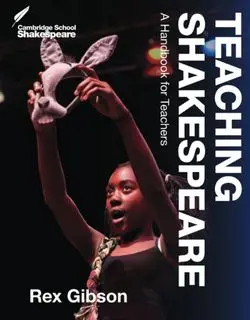
Teaching Shakespeare: A Handbook for Teachers by Rex Gibson (Cambridge University Press, 2016)
Debra says: ‘This book, alongside the national Shakespeare in Schools project of the 1990s, changed the way many teachers at the time approached the teaching of Shakespeare. The fundamental point that Gibson makes is that the text is a script, written to be interpreted in performance. Gibson’s teaching approaches encourage direct engagement with Shakespeare’s language, the exploration of character and plot, and consideration of possibilities for production. He argues that this approach helps students to ‘develop a genuine sense of ownership of the play’ and ‘to ask their own questions, to create and justify their own meanings, rather than having to accept only the questions and interpretations of others’. Sometimes, this approach has been implemented as a ‘fun’ strategy to engage learners, but it is far more than this – it engages deeply and directly with the text and its possible interpretations, and does not shy away from problems the text poses in the 21st century. Anyone who has seen the RSC’s recent production of Measure for Measure, and how it handles the ending will understand the resonance of Gibson’s message.
 Crafting writing
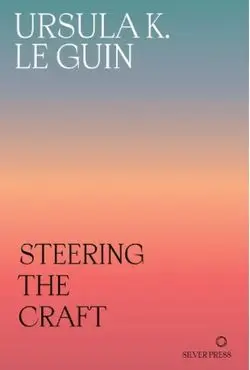
Debra says: ‘I have always loved writing, and teaching writing, and this book influenced not only how I thought about teaching writing but directly influenced my own research on writing. Like many professional writers, Le Guin emphasises the notion of writing as a craft, and argues that ‘once we’re keenly and clearly aware of these elements of our craft, we can use and practice them until – the point of all practice – we don’t have to think about them consciously at all because they have become skills’. In a nutshell, the book explores the relationship between language choices (grammar) and meaning-making, highlighting this link with reference to published narratives through a series of exercises. Steering the Craft shaped my practice, not so much in terms of strategies I would use in the classroom, but by helping me understand and verbalise the craft of writing more clearly (I hope!) for students.
 Linguistic equality and diversity
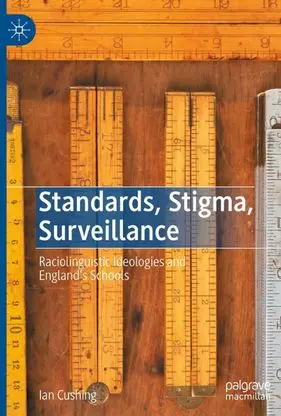
Standards, Stigma, Surveillance: Raciolinguistic ideologies and England’s Schools Ian Cushing (Palgrave Macmillan, 2023)
Debra says: ‘Our understanding of children’s language has come a long way since Newbolt railed against the ‘filthy habits of speech contracted in the home’. But Ian Cushing’s book is significant for an era where we are all more aware of inclusion, marginalisation and social justice, and work to ensure students’ educational opportunities are equitable. Cushing argues that ‘Language standards are never neutral or apolitical’, and through his detailed analysis of both official curriculum documents and teacher talk, he shows how surveillance and standardisation reproduce inequality while appearing objective. He contends that current language expectations in schools are socially constructed, reflecting raciolinguistic beliefs that favour white, middle-class norms. This positions other students as using ‘deficit discourses of language’, and ‘linguistic difference is repeatedly reframed as linguistic failure’. This book is challenging – and rightly so – and it made me think hard about practices and strategies which I take for granted, and which need rethinking to ensure that all students are enabled to be powerful and agentic in how they use language.
 A wide-angled lens
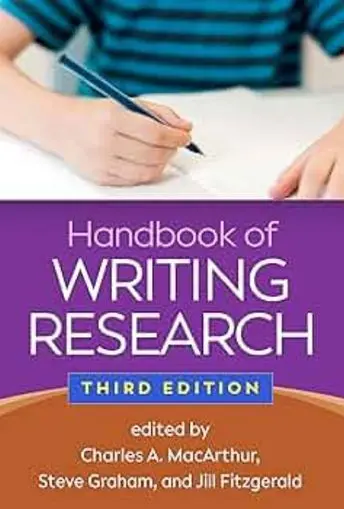
Handbook of Writing Research (Third edition) Edited by Charles A. MacArthur, Steve Graham and Jill Fitzgerald (Guilford Press, 2025)