The Teacher’s Bookshelf: CPD titles to support your literacy teaching
19 November, 2025 Welcome to The Teacher’s Bookshelf, our blog series highlighting must-read titles to support your literacy teaching and professional development. Each half term, we ask a literacy expert to share four or five books that have made a real difference in their work – titles that offer fresh thinking, proven strategies, and real classroom impact. Whether you’re exploring a new topic or refining your approach, these hand-picked recommendations are sure to be a valuable addition to your staffroom or home library.
We are delighted to welcome Jo Tregenza as our latest guest reviewer. Jo is a Reader in Primary Education at the University of Sussex and the current President of the United Kingdom Literacy Association (UKLA). Jo has over 30 years’ experience of working in education: as a primary teacher, National Literacy consultant, independent consultant, and now as a teacher educator and researcher. Her interests lie in reading, the links between reading and writing, and promoting picture books wherever she goes. She is currently focusing her research on schools in areas of high disadvantage who are getting excellent reading outcomes.
 Making the link between phonics and books
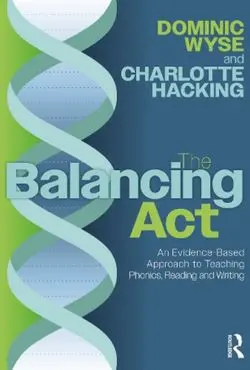
The Balancing Act: An Evidenced-based Approach to Teaching Phonics, Reading and Writing by Dominic Wyse and Charlotte Hacking (Routledge, 2024)
Jo says: ‘Highly Commended in this year’s UKLA Academic Book Award, Wyse and Hacking’s much-needed counterpoint to reductive phonics debates places decoding firmly within the rich, meaningful context of real books. What the authors do so well is remind us that phonics is not an end in itself; it’s a tool for unlocking stories, ideas, and imagination. They write with clarity and conviction about the importance of high-quality children’s literature, showing how it can support phonics learning while also nurturing comprehension, vocabulary, and love of reading. In my work with schools serving disadvantaged communities, this message is vital. Children need access to texts that reflect their lives, stretch their thinking, and invite joy.
‘For anyone seeking to teach phonics in a way that honours children’s curiosity and capacity, this book is both practical and principled. It reminds us that reading is not just a skill, it’s a human right, and a source of delight.’
 Challenging deficit thinking
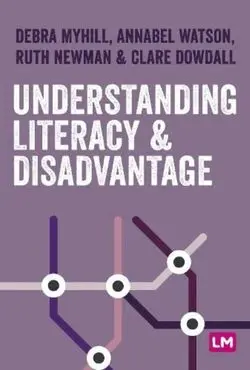
Jo says: ‘As someone whose own research has focused on disadvantage and its impact on children’s literacy, I found this book to be both affirming and deeply challenging. It is a text that refuses easy answers, instead inviting educators to confront the complex relationship between poverty, language, and learning.
‘What struck me most was its insistence that we must reject deficit thinking. The authors write: ‘Children’s individual backgrounds need to be valued and drawn upon; deficit descriptions of disadvantaged children and low expectations must be avoided and challenged.’
‘This aligns with what I have consistently seen in schools: when teachers start from a place of respect for children’s lived experiences, literacy growth accelerates. The book also reminds us that: ‘Addressing literacy and disadvantage requires high-quality teaching, first and foremost, there are no quick fixes.’ That message is vital. Sustained, thoughtful teaching – rooted in genuine understanding – is the single most powerful intervention we can provide.
‘Understanding Literacy and Disadvantage bridges research, practice, and policy with rare clarity. For anyone committed to literacy equity, it offers both a challenge and a guide – one that continues to inform my own thinking and my work with teachers today.’
 Putting talk at the heart of every classroom
Exploring Talk in School edited by Neil Mercer and Steve Hodgkinson (Sage Publications Ltd 2008)
Jo says: ‘Neil Mercer’s work, which has been so heavily influenced by the great Douglas Barnes, has never felt more relevant. In a world where misinformation spreads faster than truth; where issues of racism, bias and injustice demand thoughtful, reasoned discussion, we need classrooms that help children think aloud together.
‘We cannot assume that reasoning, questioning and respectful disagreement simply happen. They must be taught and modelled through rich classroom dialogue, purposeful group work, and the kind of teacher talk that invites exploration rather than simple recall: ‘Talk in which learners engage critically but constructively with each other’s ideas, using reason and evidence and considering alternatives before reaching a joint decision.’
‘Barnes and Mercer’s principles transform classrooms and equip children to become more discerning readers of the world, better able to question what they see, hear and share. If we want future citizens who can see beyond soundbites, resist manipulation, and engage in reasoned, empathetic debate, we need to keep putting talk – purposeful, critical, and inclusive – at the heart of every classroom.’
 A restorative vision
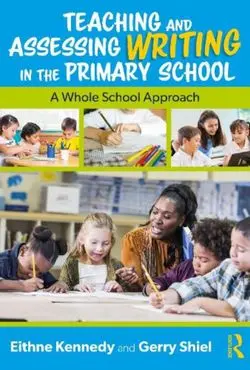
Teaching and Assessing Writing: A Whole School Approach by Eithne Kennedy and Gerry Shiel (Routledge 2025)